ideola

Joined: 01 Oct 2004
Posts: 15550
Location: Spring Lake MI
|
 Posted: Wed May 22, 2013 10:33 pm Post subject: Electric 924 in Winona MN Posted: Wed May 22, 2013 10:33 pm Post subject: Electric 924 in Winona MN |
 |
|
This project is so unique, I figured it deserved to be here for posterity.
For sale on Craigslist:
http://rmn.craigslist.org/cto/3727308807.html
Links to the owner's website:
http://www.geopathfinder.com/Porsche924.pdf
http://www.evalbum.com/2328
http://www.geopathfinder.com/9659
| Quote: | Our Second Transportation choice: our solar-charged, plug-in electric vehicle conversion for warm but rainy weather, or when we need to haul more, or we're in a hurry:
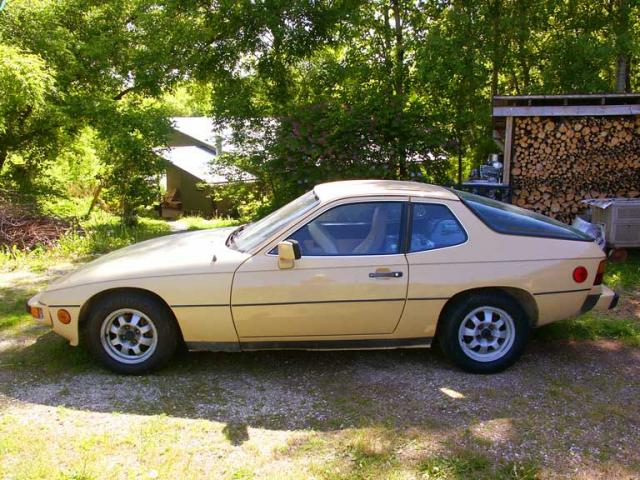
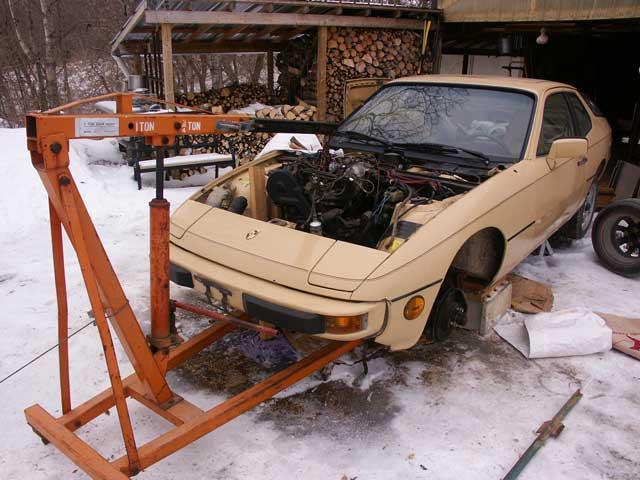
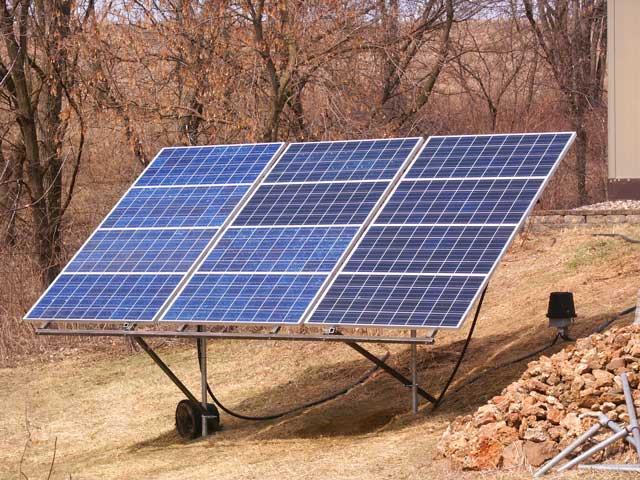
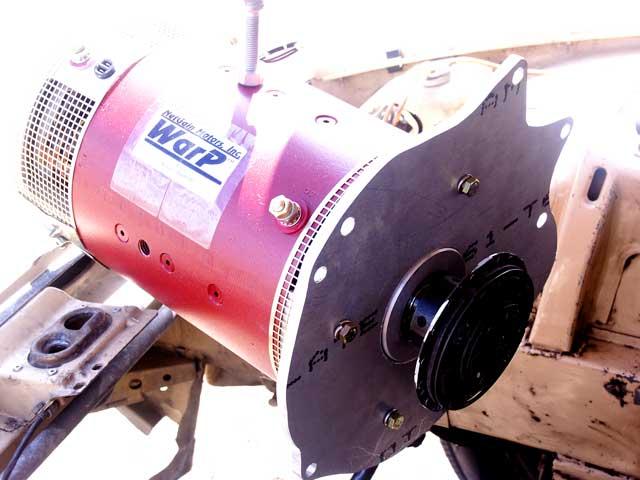
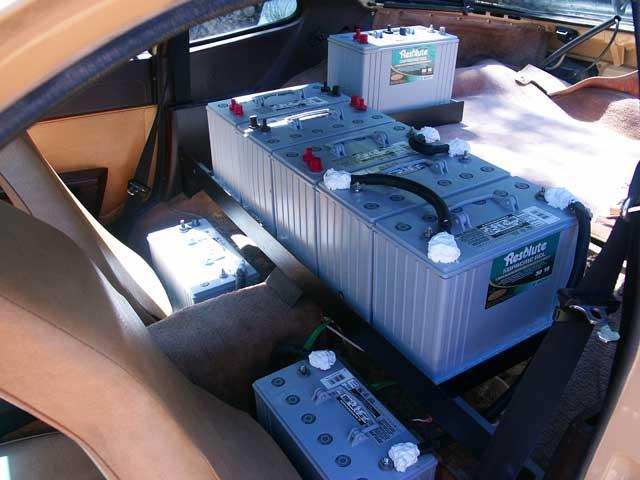
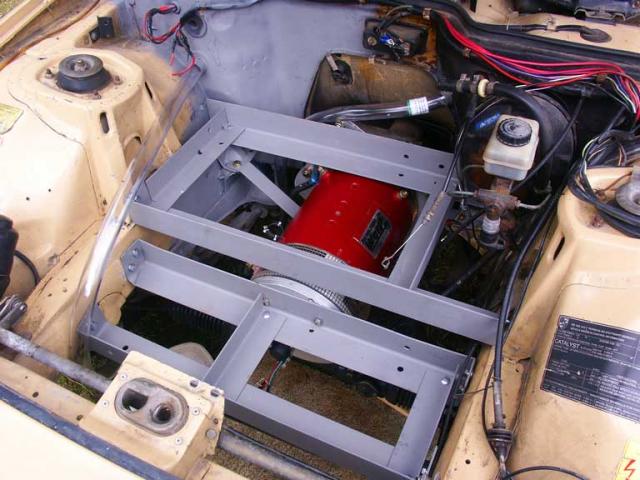
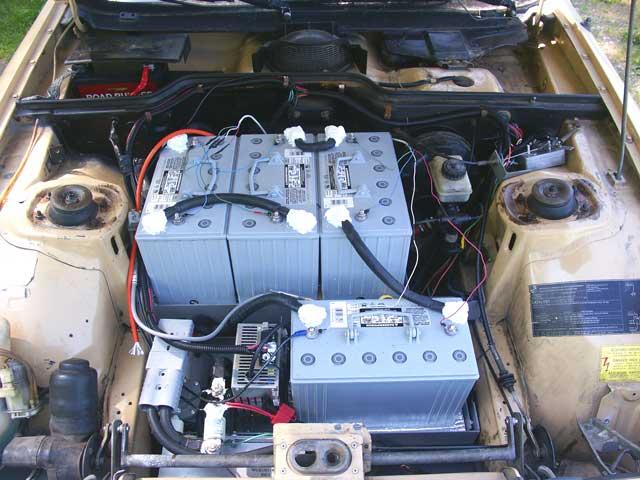
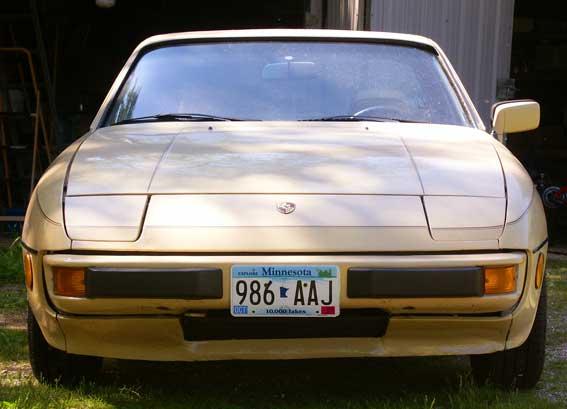
This is our latest project as of the Winter of 2008. We are converting a 1979 Porsche 924 into an all-electric, battery-powered commuter vehicle. It will use 12 lead-acid, gel cell batteries and have a range (conservatively) of about 50 miles at 55 miles per hour. A slower average speed gives a MUCH greater range (up to 200 miles if you're willing to drive at golf-cart speed, due primarily to less air resistance and a battery phenomenon called "capacity offset"). It will recharge from our newly expanded photovoltaic solar array (1500 watts) using an on-board, 120-volt AC, temperature-compensated, gel-cell charger. In this photo the driver's seat is removed to repair the upholstery. In the background is my neighbor's old restored VW Beetle. To see some other Porsche 924 conversions on www.evalbum.com, try these links: Steve Clunn's and Gary Dion's. You can see the EV Album listing of our car by Clicking Here.
Many people seem really skeptical, if not downright angry, about the notion of a car that can only travel 50 miles at highway speed, then needs recharging. Think of it as a vehicle that's had bariatric surgery ("stomach stapling"). It takes smaller gulps of energy and is best fed more frequently. You think there's no charging infrastructure? I think that there are a lot more AC outlets, at least in any city/town, than gasoline stations! You think charging is too slow compared to gas fill-ups? Will you still think it's slow compared to walking or bicycling once you've burned up all of the cheap fossil fuels?
General Motors did plenty of surveys back in the '90's, when building their EV-1, and found that this mileage range suited about 90% of commuters. The biggest stumbling blocks are related: owning, insuring, licensing, and maintaining a second car, and the initial higher cost of battery-powered transportation, especially if you want the absolute latest technology and more range. People seem to want a vehicle that can do everything, even though they typically own more than one vehicle per family. That's why the Japanese did so well by introducing hybrids, and why GM really stumbled with the electric-only EV-1.They learned their lesson with the Volt, as owners report filling their gas tanks very infrequently, relying on their 38 mile electric-only range most of the time.
But re-building a cheap, used, possibly non-functional petroleum car into an electric that suits most of your transport needs makes lots of economic sense, even if you charge it from the Grid. We drive and insure the electric car about 8 months per year (mainly because batteries don't work well in extreme cold), saving our high-mileage gasoline car (seen below) for long-distance trips and the 4 months per year when it's just WAY too cold outside.
But why, you may ask, did we use such an old foreign sports car?- It's fairly light, for a car,
- it doesn't have computerized gauges & controls, and very few electric accessories that would lower our range,
- being a production body it's already crash-tested and deemed road-worthy,
- with a high-voltage battery bank and motor it's capable of reaching high speeds quickly (to avoid crazy drivers),
- it is registered, insured, and licensed exactly like its gas-fueled incarnation,
- it has a very small frontal area (for a car; riders on bikes are much smaller),
- it has a very low drag coefficient (aerodynamic shape),
- this combination gives us the range we need while keeping battery cycling below 50%,
- its suspension can handle the weight of the batteries, once the combustion-related stuff is removed,
- it has enough room for our needs,
- it has been stored in a heated garage for the past 18 years so there is almost no rust on it, and
- it was fairly cheap yet driveable, so we could easily get it home,
- and there were 151,000 built (the most of any Porsche) with many cheaper, easier to find, VW parts on board.
What are the drawbacks? First there is the lack of all the "bells and whistles" people have grown accustomed to. But seriously, do you really need your car to be a cellphone, entertainment center, storage locker, and snack bar? Can't you just focus on driving safely? I like the idea of traction control, stability control, automatic parking, proximity radar, heated seats, GPS and navigation, climate zone control, gadget synchronization, satellite tracking, etc., etc. But it all comes at some cost and I'm not just talking about money. Sports car drivers know what I mean! Sometimes you just want a car that acts like a car.
Then there are the actual battery drawbacks. These include:- Slow recharging, although 240/480-volt charges are available. Batteries all tend to prefer slower charging rates as they get more full. So most chargers are designed to get you fairly quickly to 80%, then slow down the charge rate. Capacitors charge quickly but actually have poor capacity and voltage per capacitor. Their huge voltage swings can be a problem for the motor controller so they are best used in combination with batteries.
- Poorer range as the temperatures drop, and this applies to all battery and fuel cell vehicles, converted or purchased new. This can be eliminated or reduced through the addition of, or substitution for, ultracapacitors (which have their own unique problems). Or you can go the low-tech route using battery warmers plugged in (and sucking power) when you aren't actually driving.
- You are dealing with more physical size and weight than your gas tank, even when it was full. Proper weight balance and suspension are major considerations. Lithium batteries have more capacity by weight than lead-acids, but they are pretty bulky. Sheer battery bulk, configuration, placement, and room for cooling can be factors in choosing a vehicle to convert.
- Batteries are not as dangerous as a half-full tank of explosive gasoline vapor, but they still require well-designed mounts, strapping, temperature monitoring and control, and, in some cases, venting. Sealed batteries add a little more weight, bulk, and expense but they are a great choice for safety, convenience, and longevity.
- The latest design; worth waiting for, and a great reason to do nothing! Seriously, I can't recall a battery discussion I've had that didn't include someone's comment about the latest design they just read about in the popular press. It will revolutionize energy storage. It's lighter, less bulky, cheaper, more environmentally benign, etc, etc. What they didn't see in the technical journals is that their favorite design only works at 400 degrees, can't be allowed to freeze, self-discharges rapidly, has low power output or longevity, etc., etc. Waiting for the Holy Grail of batteries just leads to easy excuses for inaction!
And don't forget to keep the total design in mind. I recently met a man who intends to rebuild a 4WD Subaru into an electric conversion in Montana. The added weight of trucks and SUVs does mean more room for batteries and better suspensions to handle the weight but there are some other trade-offs. Besides the gnarly roads he wants to drive (that add even more tire friction to some already high rolling resistance tires) he will be dealing with increased air resistance (that will sap range and top speed), hauling more range-killing weight up the hills, the added mechanical resistance of the 4WD system, and the cool temperatures that batteries dislike. Getting any kind of range will mean using lithium batteries and ultracapacitors along with a fast charger and lots of monitors, so this project will not come cheaply!
We actually built a previous EV conversion, a hybrid no less, in 1992. Using an Oldsmobile Firenza with a blown engine, we added a G.E. motor, 96 volts of reconditioned nickel-iron (Ni-Fe), "Edison" batteries made in the 1950's, a Curtis 1220C controller, and an 11 HP, 6500 watt, gasoline generator that started from the "start" position of the keyswitch. Mistakes were made and lessons quickly learned. Lesson #1: don't pull recycled 4/0 cable through EMT (electrical metal tubing) if it's a tight fit. The car wouldn't do over 25 mph because a repaired spot in the cable insulation got cut by the inner metal seam of the EMT and caused a high resistance short that wasted most of the batteries' power. We didn't discover the problem until the car was torn apart and the parts recycled to other EV enthusiasts. And the generator added SO MUCH complexity, weight, noise, vibration, space deficit, etc. Never again! |
_________________
erstwhile owner of just about every 924 variant ever made |
|

 FAQ
FAQ Search
 Memberlist
 Usergroups
 Register
 Profile
 Log in to check your private messages
 Log in
 924 FAQ (Technical)


